A Homeowner & Business Owner’s Guide to Key Control | Fort Collins, CO | 2026
Most people give little thought to the keys in their pocket — until a key goes missing, a tenant moves out, or a security concern forces the question: who else has access to this building?
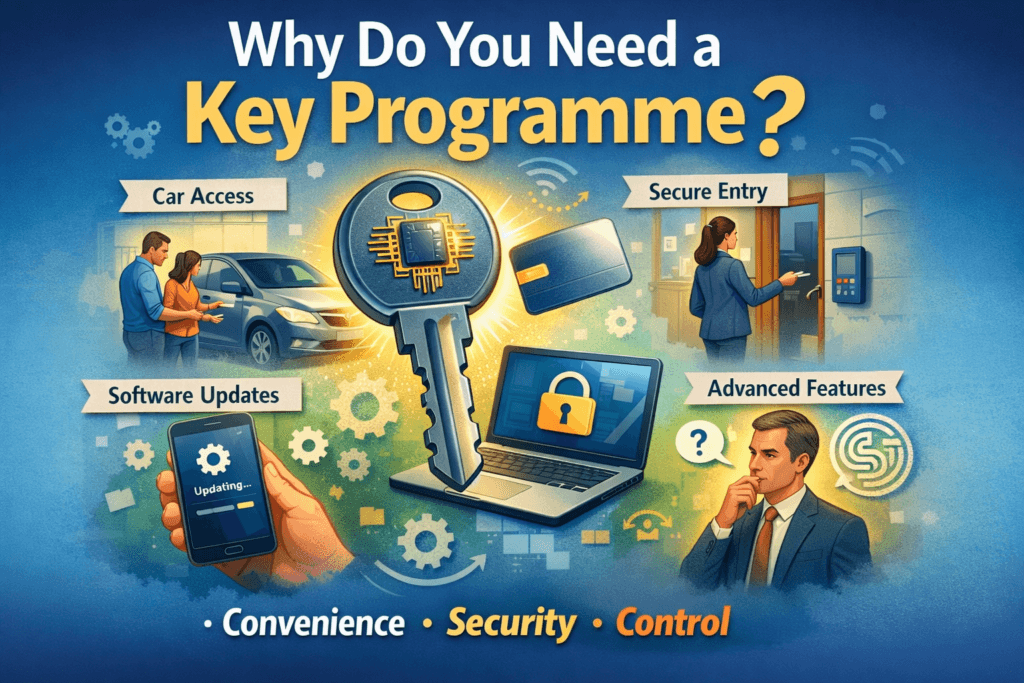
A key programme is a structured system of key control that tracks, manages, and restricts access to your property. Whether you own a home, manage a rental property, or run a commercial building, having a well-organised key programme in place is one of the most practical steps you can take toward genuine, long-term security.
This guide explains what a key programme is, why it matters, and how to set one up correctly for your property in Fort Collins, Colorado.
What Is a Key Programme?
A key programme — sometimes called a key control system — is an organised method of managing which keys exist for a property, who holds each key, and how access can be restricted or changed over time.
Unlike simply handing out copies of a standard key, a formal key programme typically involves:
- Restricted keys that cannot be duplicated without authorisation from the lock owner
- A documented record of every key issued, to whom, and when
- A clear process for revoking access when someone leaves or a key is lost
- Master key systems that allow tiered access — so not everyone enters every area
- Regular audits to ensure all issued keys are accounted for
| Key Programme at a Glance | |
| Purpose | Control and track who has access to your property |
| Best suited for | Homes, rental properties, offices, schools, commercial buildings |
| Core component | Restricted key systems + access documentation |
| Managed by | A certified locksmith with key control expertise |
| Review cycle | Annually, or after any change in occupancy or staffing |
Why Key Control Matters More Than Most People Realise
The average homeowner has little idea how many copies of their house key are in circulation. Previous owners, former tenants, housekeepers, contractors, and neighbours may all have duplicates that were never recovered.
This is where the absence of a key programme becomes a genuine security gap. Standard keys can be copied at any hardware store in minutes — meaning one unrecovered key can silently compromise your home for years without your knowledge.
“Key control is not just about locks — it is about knowing, at any given moment, exactly who can walk through your door.”
Beyond residential use, the stakes are even higher for business owners. Employee turnover, shift-based access requirements, and the need to restrict certain areas to specific personnel all create key management challenges that a properly structured programme is designed to address.
Common Situations That Call for a Key Programme
- You have recently purchased a home and do not know how many keys were made by previous owners
- A tenant has moved out of your rental property and not returned all keys
- An employee has left your business and their key is unaccounted for
- You have had maintenance workers or contractors access your property over the years
- You want to restrict access to specific areas within a larger building
- Your business has grown and key management has become difficult to track manually
Restricted Key Systems: The Foundation of a Key Programme
The most important component of any key programme is a restricted key system. This means the keys used in your programme can only be duplicated by an authorised locksmith using a specific key blank that is not available to the general public.
Restricted key systems are widely used in commercial settings but are increasingly adopted by homeowners who want a higher level of access control. Brands such as Medeco, Mul-T-Lock, and Schlage Primus all offer restricted key systems suitable for residential and commercial use.
How Restricted Keys Work
When a restricted key system is installed, the lock owner — you — holds a key card or authorisation document that must be presented before any additional keys can be cut. This means even if someone takes your key to a hardware store, they will be turned away. Duplication is only possible through a verified, authorised channel.
This single feature eliminates one of the most common and overlooked vulnerabilities in standard key management — unauthorised copies made without your knowledge.
Master Key Systems for Multi-Access Properties
For properties with multiple entry points, units, or access levels, a master key system adds another layer of practical control. Rather than carrying a separate key for every door, a master key system allows specific keys to open specific doors — with one master key that opens all of them.
| Master Key System — Access Levels Explained | |
| Grand Master Key | Opens every lock in the entire system — held by the property owner |
| Master Key | Opens a defined group of locks — suited for managers or supervisors |
| Sub-Master Key | Opens a specific zone or floor — suited for area supervisors |
| Change Key | Opens one specific lock only — issued to individual tenants or staff |
Master key systems are particularly well-suited for apartment buildings, office complexes, schools, and multi-unit rental properties. They remove the need for large key bundles while keeping precise control over who can access which areas.
How to Set Up a Key Programme for Your Property
Setting up a key programme does not need to be complicated. The process follows a clear set of steps that a qualified locksmith can guide you through from start to finish.
1. Security Assessment
A certified locksmith surveys all entry points on your property — doors, gates, storage areas, and any restricted zones. This establishes a clear picture of where locks are needed and what level of access each point requires.
2. Choose Your Lock and Key System
Based on your property’s requirements, the right lock hardware is selected. This may include restricted key cylinders, high-security deadbolts, or a full master key system depending on the size and complexity of your property.
3. Document Every Key Issued
A key register is created — a record of every key cut, who holds it, and when it was issued. This becomes your ongoing access log. Any time a key is issued or returned, the register is updated accordingly.
4. Establish a Key Return Policy
For rental properties and businesses, a clear policy is put in place requiring all keys to be returned upon a change in tenancy or employment. Deposits or documented agreements can be used to enforce this.
5. Schedule Regular Audits
At least once a year — or whenever there is a change in occupancy, staff, or ownership — review your key register, confirm all keys are accounted for, and rekey or replace any locks where control has been lost.
When Rekeying Is the Right Starting Point
If your property currently has standard locks with no key control system in place, rekeying is often the most practical first step. Rekeying adjusts the internal pin configuration of your existing lock so that all previous keys no longer work — without the expense of replacing the hardware entirely.
This is strongly recommended in these situations:
- Moving into a previously owned or rented home
- Following any change in tenants or household members
- After a key has been lost or not returned
- As the starting point before introducing a new restricted key system
A qualified Fort Collins Locksmith can rekey most standard residential locks in a single visit, giving you a clean and documented starting point for your key programme going forward.
Smart Locks and Digital Key Programmes
For property owners who prefer a keyless approach, smart lock systems offer a digital alternative to traditional key programmes. Instead of physical keys, access is managed through PIN codes, smartphone apps, or digital credentials that can be issued and revoked remotely.
The key control principles remain the same — you still need a documented record of who has access, a clear process for removing access when needed, and a regular review cycle. The difference is that changes can be made instantly without any physical key management.
| Smart Lock vs. Restricted Key System | |
| Access method | PIN / App / Fob vs. Restricted physical key |
| Revoking access | Instant via app vs. Requires rekeying or replacement |
| Audit trail | Digital activity log vs. Manual key register |
| Power dependency | Yes — battery or wired vs. None |
| Best for | Tech-forward owners vs. Traditional properties or high-security needs |
Many property owners choose a hybrid approach — smart locks on primary entry points combined with restricted key cylinders on secondary or high-security areas. A Locksmith in Fort Collins can help you determine the right combination for your specific property layout and security goals.
Who Benefits from a Key Programme?
A key programme is not reserved for large commercial properties. Any property with more than one entry point — or more than one person who needs access — benefits from structured key management.
Homeowners
A key programme gives residential homeowners a clear record of who holds keys to their home. This is especially valuable after purchasing a previously-owned property, completing a renovation, or having service workers in the home over an extended period.
Landlords & Property Managers
For rental properties, a key programme makes tenant transitions more manageable. Rather than replacing all hardware every time a tenant moves out, a restricted key system allows individual cylinders to be rekeyed at minimal cost, maintaining full control without significant expense.
Business Owners
Commercial properties with staff, shift workers, or multiple access zones benefit the most from a structured key programme. A master key system combined with restricted key control removes the security risks that come with employee turnover, and a digital access log supports accountability across your team.
Schools, Healthcare Facilities & Public Buildings
Institutions with complex access requirements, large numbers of key holders, and strict security obligations are among the strongest candidates for a professionally designed key programme. In these settings, a key programme is not optional — it is a core part of responsible facility management.
Final Thoughts
A key programme is one of the most overlooked — and most effective — tools in property security. It costs far less than replacing locks after a break-in, and it eliminates the silent vulnerability of keys in circulation that you cannot account for.
Whether you are starting from scratch with a newly purchased home, bringing order to a rental portfolio, or building a comprehensive access system for a commercial property, the principle is the same: know who holds every key, maintain the ability to change that at any time, and review your system regularly.
Security is not a one-time decision. It is an ongoing practice — and a key programme is the structure that makes it sustainable.
Getting started is straightforward. A security assessment, the right hardware, and a documented key register are all it takes to bring meaningful control back to your property.
Fort Collins Locksmith | Locksmith in Fort Collins | Fort Collins, CO